
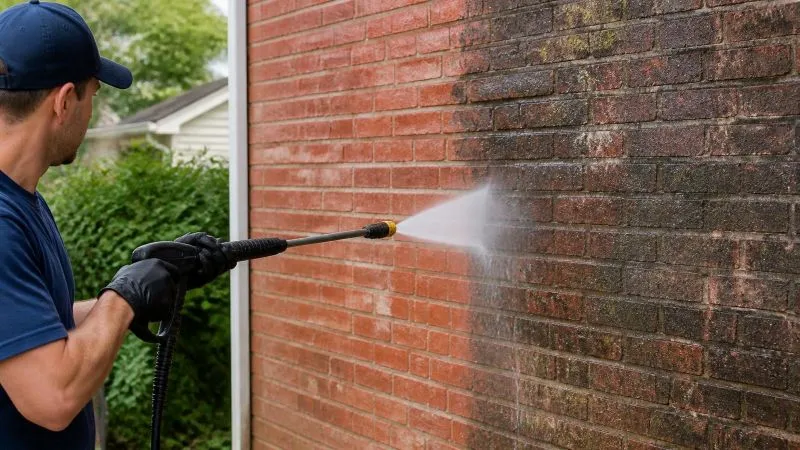
How to Pressure Wash Brick Properly
Brick is tough, but it isn't indestructible. Pressure washing can bring a dingy, green-streaked wall or patio back to life in an afternoon. The wrong setup can also chip the face of the brick and wash out the mortar holding it together. The difference comes down to pressure, technique, and patience.
At Dragon Pressure Washing & Window Cleaning, we clean brick homes, walkways, and patios all the time. This guide walks you through the same process our crew follows, so you can decide whether to tackle it yourself or hand it off.
You’ll also like to read this: How Pressure Washing Bricks the Right Way (Do's & Don'ts)
Key Takeaways
Brick needs lower pressure than concrete. Start gentle and work up only if needed.
Use a wide fan tip and keep the nozzle moving at a steady distance.
Mortar joints are the weak spot. Never blast them at close range.
Let the brick dry fully before sealing, and expect that to take a day or two.
Old, soft, or painted brick is often better handled by a professional exterior cleaning company.
Why Brick Needs a Careful Approach
Brick is a porous material. It soaks up water, and it holds onto dirt, algae, and mineral deposits in tiny pockets across its surface. That porosity is why it stains so easily, and it's also why aggressive cleaning does so much harm.
Older brick is especially vulnerable. Many homes built before the mid 1900s use softer brick and lime-based mortar that crumbles under high pressure. Even newer brick has a thin fired outer skin that can be stripped away, leaving a rougher surface that collects even more dirt next season.
What You'll Need Before You Start
Gather your gear first so you aren't hunting for it mid-job:
A pressure washer with adjustable pressure (electric or gas)
A 25 degree or 40 degree fan tip (skip the zero degree tip entirely)
A brick-safe or mild detergent, or a gentle algae and mildew cleaner
A soft-bristle brush for stubborn spots
A garden hose and sprayer for rinsing plants
Safety glasses, closed-toe shoes, and gloves
Plastic sheeting and painter's tape to protect windows, outlets, and light fixtures
How to Pressure Wash Brick
Follow these steps in order. Rushing the prep is where most DIY mistakes begin.
1. Inspect the brick and mortar
Walk the surface and look closely. Check for loose bricks, cracked mortar, and gaps where water could get behind the wall. Repair these first. Water forced into a failing joint can cause moisture problems inside the wall.
2. Protect everything around the brick
Wet down nearby plants and shrubs with your hose so they absorb less cleaner. Cover outdoor outlets, light fixtures, and vents. Close windows and doors. If you're cleaning near wood or painted trim, tape off the edges.
3. Test a small, hidden area
Pick a spot that nobody will notice, like the back corner of a patio or the low edge near a foundation. Start with the washer on its lowest setting and work up. For most brick, a range of roughly 500 to 1,500 PSI is plenty, and softer or older brick should stay at the bottom of that range. If you see dust, pitting, or color change, stop and drop the pressure.
4. Apply a gentle cleaner
Apply a mild detergent or algae cleaner with a low-pressure sprayer, working from the bottom up so the product doesn't streak. Let it sit for 5 to 10 minutes, but don't let it dry. Spray a little water to keep it wet if the sun is strong.
Avoid harsh acids unless you know exactly what you're doing. Strong acid can burn the brick face and discolor mortar, and it's tough on nearby plants and metal.
5. Wash with a wide fan and steady motion
Attach your wide fan tip and hold the nozzle about 12 to 18 inches from the surface. Move in smooth, overlapping sweeps, following the lines of the mortar rather than cutting across them. Work from top to bottom on walls so dirty water runs over unwashed areas instead of clean ones.
Keep the wand moving. Pausing in one spot is how you etch lines and gouge soft brick.
6. Treat stubborn stains by hand
For moss, heavy algae, or dark stains, use your soft brush with a little cleaner rather than cranking up the pressure. Scrub gently, then rinse. Patience beats power every time on brick.
7. Rinse thoroughly
Rinse the whole area with clean water, again from top to bottom. Leftover detergent can leave a film or attract new dirt, so don't skip this step.
8. Let it dry completely
Give the brick at least 24 to 48 hours to dry, longer in cool or humid weather. Trapped moisture is the most common reason sealers cloud or fail.
Common Mistakes to Avoid
Most damaged brick we see comes down to a handful of errors:
Too much pressure. Higher PSI doesn't mean a better clean. It means a faster way to ruin the surface.
Using a narrow tip. A zero or 15 degree tip concentrates force and can slice into brick and mortar.
Standing too close. Distance is your safety margin.
Spraying upward into joints. This pushes water behind the brick face.
Skipping the test patch. Every wall is different, and a two minute test saves a costly repair.
What About White Powder on Brick?
If you see a chalky white film, that's likely efflorescence, a salt deposit left behind as moisture moves through the brick. Pressure washing alone may not remove it, and it can come back if the underlying moisture issue isn't fixed. A dry brush and a cleaner made for efflorescence usually work better than blasting it with water.
Should You Seal Brick After Cleaning?
Sealing can help protect against stains, algae, and moisture, especially on patios and walkways that stay damp. Choose a breathable, penetrating sealer made for masonry, and apply it only when the brick is bone dry. A non-breathable coating can trap moisture inside and cause flaking down the road.
When to Call an Exterior Cleaning Company
Some jobs aren't worth the risk to do yourself. Consider calling a professional if:
Your brick is old, soft, or already crumbling
The wall is tall, or you'd need a ladder to reach it
The brick is painted, stained, or has been previously sealed
You're dealing with heavy rust, oil, or efflorescence
You'd rather not spend a weekend on it
A trained exterior cleaning company knows how to match the method to the material. At Dragon Pressure Washing & Window Cleaning, we often use soft washing on delicate brick, which relies on low pressure and the right cleaning solution to lift grime without stressing the surface. We also carry the equipment and insurance that protect your home if something goes wrong.
Fresh Brick, No Regrets
Done right, pressure washing brick restores color, removes years of buildup, and extends the life of your masonry. Done carelessly, it leaves permanent damage that no amount of cleaning can undo. Go slow, keep the pressure low, and trust the process.
If you'd rather leave it to the pros, the team at Dragon Pressure Washing & Window Cleaning is ready to help. Reach out for a free estimate and see what your brick looks like when it's truly clean.


